The Mexican people, the Mexican people


«In Santa Cruz, where I live, there’s an organization called the Homeless Garden Project. On a small working farm at the west end of town, it offers employment, training, support, and a sense of community to members of the city’s homeless population. It can’t “solve” the problem of homelessness, but it’s been changing lives, one at a time, for nearly thirty years. Supporting itself in part by selling organic produce, it contributes more broadly to a revolution in how we think about people in need, the land we depend on, and the natural world around us. In the summer, as a member of its C.S.A. program, I enjoy its kale and strawberries, and in the fall, because the soil is alive and uncontaminated, small migratory birds find sustenance in its furrows.
There may come a time, sooner than any of us likes to think, when the systems of industrial agriculture and global trade break down and homeless people outnumber people with homes. At that point, traditional local farming and strong communities will no longer just be liberal buzzwords. Kindness to neighbors and respect for the land—nurturing healthy soil, wisely managing water, caring for pollinators—will be essential in a crisis and in whatever society survives it. A project like the Homeless Garden offers me the hope that the future, while undoubtedly worse than the present, might also, in some ways, be better. Most of all, though, it gives me hope for today.»
“Cuando volvió junto [a la cabeza del] Gato de Cheshire, quedó sorprendida al ver que un gran grupo de gente se había congregado a su alrededor. El verdugo, el Rey y la Reina discutían acaloradamente, hablando los tres a la vez, mientras los demás guardaban silencio y parecían sentirse muy incómodos. En cuanto Alicia entró en escena, los tres se dirigieron a ella para que decidiera la cuestión, y le dieron sus argumentos. Pero, como hablaban todos a la vez, se le hizo muy difícil entender exactamente lo que le decían.
La teoría del verdugo era que resultaba imposible cortar una cabeza si no había cuerpo del que cortarla; decía que nunca había tenido que hacer una cosa parecida en el pasado y que no iba a empezar a hacerla a estas alturas de su vida.
La teoría del Rey era que todo lo que tenía una cabeza podía ser decapitado, y que se dejara de decir tonterías. La teoría de la Reina era que si no solucionaba el problema inmediatamente, haría cortar la cabeza a cuantos la rodeaban.”
Lewis Carroll, Alicia en el país de las maravillas, descargable aquí: https://ucm.es/data/cont/docs/119-2014-02-19-Carroll.AliciaEnElPaisDeLasMaravillas.pdf
«Hay que poder dividir las ideas siguiendo sus… articulaciones, y no ponerse a quebrantar ninguno de sus miembros, a manera de un mal carnicero… Y de esto es de lo que soy yo amante, Fedro, de las divisiones y uniones, que me hacen capaz de hablar y de pensar. Y si creo que hay algún otro que tenga como un poder natural de ver lo uno y lo múltiple, lo persigo «yendo tras sus huellas como tras las de un dios».»
Platón, Fedro, 265e-266c
Tomado de: https://mutatisoscar.blogspot.com/2018/05/el-filosofo-dialectico-como-buen.html
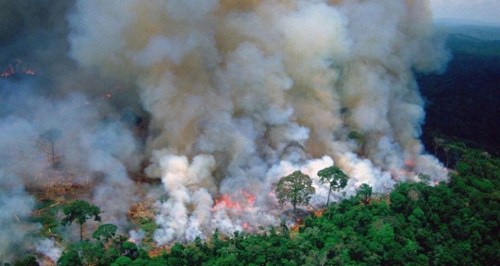
(imagen del muro de fb de Guillermo Espinosa)
«De hecho, los incendios forestales que padece Brasil en lo que va de año no tienen precedentes desde que en 2013 comenzaron a monitorearse desde el espacio.
Pero el fuego también es noticia en otros países como Bolivia, Paraguay y Perú»
https://www.bbc.com/mundo/noticias-america-latina-49426794
«what neoliberalism’s further weakening of the social is likely to mean for the future organization of labor by examining data and information companies associated with the emergence of the corporate sharing economy. It focuses on the sharing economy because it is here that the implications for workers of such a shift to a postwelfare capitalist society are most apparent today. This is a society in which we are encouraged to become not just what Michel Foucault calls entrepreneurs of the self but microentrepreneurs of the self, acting as if we are our own, precarious, freelance microenterprises in a context in which we are being steadily deprived of employment rights, public services, and welfare support. Witness the description one futurologist gives of how the nature of work will change, given that 30 to 80 percent of all jobs are predicted to disappear in the next twenty years as a result of developments in automation and advanced robotics: “You might be driving Uber part of the day, renting out your spare bedroom on Airbnb a little bit, renting out space in your closet as storage for Amazon or housing the drone that does delivery for Amazon.”
Gary Hall, The Uberfication of the University.
Blog de literatura de Martín Cristal. Diario de lectura y otros textos
Just another WordPress.com weblog
Apuntes para picotear
Recovering the past, creating the future
Revista latinoamericana de ciencia ficción
En defensa de la vida y un habitar digno
Learn easily Greek via the linguistic relationships and the roots of the English words.
SOBRE CRÍTICA. VISUALIDAD. ESCRITURA. POEMA: ENCUENTROS; Un objeto, una cosa. Nos sentamos frente a él. Lo interrogamos: él nos dice algo. El desmontaje es en tiempo ahora: Una crítica de voces. Una crítica de imágenes. Recuerdos. Flashazos.
ARCHIVO DE PROYECTOS
Sobre la administración responsable y sostenible del planeta
arte, sociología, cuerpo vibrátil
Consejos para promover la biodiversidad en las ciudades
memoria[ndo]
informática, arqueología, opinión ...
Falsa antología mexiquense
Siguiendo el laberinto de nuestro deseo



 bordarretazos