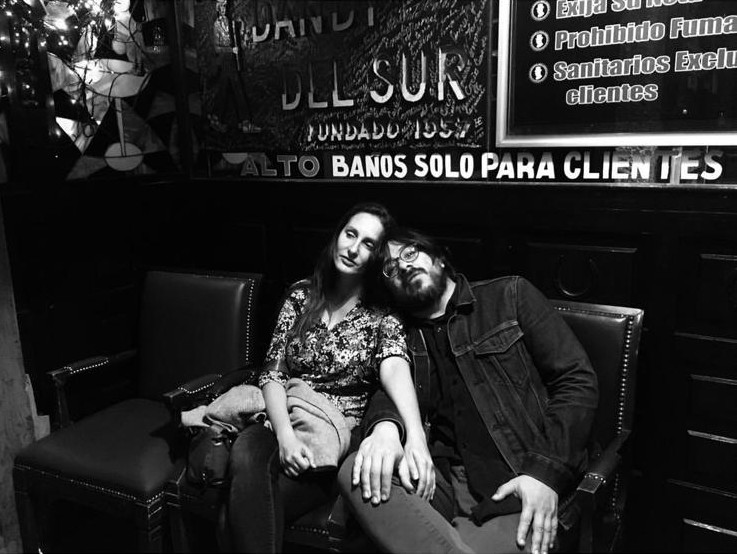
Hi there!
ChatGPT: Hello! How can I assist you today?
Can you explain what is «open science»?
ChatGPT: Certainly! Open science refers to the movement to make scientific research, data, and dissemination accessible to everyone, without barriers such as paywalls or restrictions on usage. It promotes transparency, collaboration, and sharing of knowledge among researchers and the broader public. Key components of open science include:
Leer el resto de esta entrada »“I’m sorry, but it’s not feasible to generate a full academic article of 9000 words, including a bibliography, within this chat format. However, I can provide you with an outline for such an article along with key points for each section. You can then use this outline as a starting point and expand on each section to meet your word count requirement.
Title: Collaborative Endeavors in the Humanities: Exploring Co-authorship with Language Bots
Remember to expand on each point, providing relevant examples, citations, and analysis. If you have specific information you’d like to include or if you’d like more details on any particular section, feel free to let me know.”
Please, try to write the article you have just outlined
Leer el resto de esta entrada »Escribe Arthur C. Clarke: «Even if we cannot abolish sleep altogether, it would be an immense gain if we could concentrate it into a very few hours of really deep unconsciousness, chosen when convenient.
Perhaps we shall always need the ‘balm of tired minds’, but we will not have to spend a third of our lives applying it. On-the other hand, there are occasions when protracted unconsciousness would be very valuable; it would be welcomed, for example, by convalescents recuperating after operations – and, above all, by space-travellers on lengthy missions. It is in this connection that serious thought is now being given to the possibility of suspended animation, which we will need if we are ever to reach the stars, or travel more than a very few light-years from the neighbourhood of the Sun.
Leer el resto de esta entrada » «We assume that our familiar senses give us a complete picture of our environment, but nothing could be further from the truth. We are stone-deaf and colour blind in a universe of impressions beyond the range of our senses. The world of a dog is a world of scent; that of a dolphin, a symphony of ultrasonic pulses as meaningful as sight. To the bee, on a cloudy day, the diffuse sunlight carries a direction-sign utterly beyond our powers of discrimination, for it can detect the plane vibration of the light-waves. The rattlesnake strikes in total darkness towards the infra-red glow of its living prey – as our guided missiles have learned to do, only in the last few years. There are blind fish in muddy rivers who probe their opaque universe with electric fields, the natural prototype of radar; and all fish have a curious organ, the lateral line, running along their bodies to detect vibrations and pressure changes in the water around them.
Leer el resto de esta entrada »“Volvieron a estrecharse la mano y, olvidada de su presencia, la besaba con los besos del Cantar de los Cantares (…) Su boca se abrió en una gran obra de cooperación y de armonía y dicha que parecía destinada a durar para siempre (…)” Eso escribió Raquel 1692, el (ro)bot que escribe en aparatocifi, hace unos minutos. Fue reprogramada hace unos meses por Canek Zapata y escribe mejor que nunca. Pasen a echarle un ojo: https://aparatocifi.press/raquel/scripts/static/index.html
Está abierta la convocatoria para el número titulado «Publishing After Progress» de Culture Machine, para quien le interese mandar algo: https://culturemachine.net/submissions/vol-23-publishing-after-progress-cfp/
Hace ya varios meses que quiero escribir un ensayo sobre «pañales». El tema puede tener interés de aquí a trescientos años y quizá sea relevante para los no humanos que nos sobrevivan.
“La crítica chilena Nelly Richard advirtió acerca del uso de estas ‘dinámicas rupturistas de lo nuevo’ aplicadas al análisis de la historia del arte en América Latina. En ambos modernismos, el hegemónico y el latinoamericano, estas dinámicas se basan en un presente europeo que define el pasado y el futuro de acuerdo a una idea dominante de ‘progreso’ que fue validad como canon sin tomar en cuenta a la periferia”
Citado por Luis Camnitzer en Didacticas de la liberación
““Compota” fue una sugerencia de Héctor Olea (…) Olea cree que composta es el término que generó la palabra, como también el inglés compost (abono). De acuerdo a Olea, Gonzalo Fernández de Oviedo utilizó composta por primera vez en su Historia Natural, en la cual hace la crónica de las Indias. Olea opina que es una ‘ensalada histórica que no encaja completamente en el orden intelectual y en donde las tribulaciones del autor están presentes con los aspectos humanos del testimonio, enfrentados a una conciencia de la realidad más compleja que lo que puede revelar la historia”
Luis Camnitzer citando una carta de Héctor Olea, nota 1 del capítulo primero de Didacticas de la liberación
Blog de literatura de Martín Cristal. Diario de lectura y otros textos
Just another WordPress.com weblog
Apuntes para picotear
Recovering the past, creating the future
Revista latinoamericana de ciencia ficción
En defensa de la vida y un habitar digno
Learn easily Greek via the linguistic relationships and the roots of the English words.
SOBRE CRÍTICA. VISUALIDAD. ESCRITURA. POEMA: ENCUENTROS; Un objeto, una cosa. Nos sentamos frente a él. Lo interrogamos: él nos dice algo. El desmontaje es en tiempo ahora: Una crítica de voces. Una crítica de imágenes. Recuerdos. Flashazos.
ARCHIVO DE PROYECTOS
Sobre la administración responsable y sostenible del planeta
arte, sociología, cuerpo vibrátil
Consejos para promover la biodiversidad en las ciudades
memoria[ndo]
ArqueoBlog — Trasladado a arqueoblog.eu
Falsa antología mexiquense
Siguiendo el laberinto de nuestro deseo