bordarretazos

agosto 31, 2019
Seguir al buen carnicero como si fuera un dios
«Hay que poder dividir las ideas siguiendo sus… articulaciones, y no ponerse a quebrantar ninguno de sus miembros, a manera de un mal carnicero… Y de esto es de lo que soy yo amante, Fedro, de las divisiones y uniones, que me hacen capaz de hablar y de pensar. Y si creo que hay algún otro que tenga como un poder natural de ver lo uno y lo múltiple, lo persigo «yendo tras sus huellas como tras las de un dios».»
Platón, Fedro, 265e-266c
Tomado de: https://mutatisoscar.blogspot.com/2018/05/el-filosofo-dialectico-como-buen.html
agosto 24, 2019
Agosto del 2019: incendios en el Amazonas
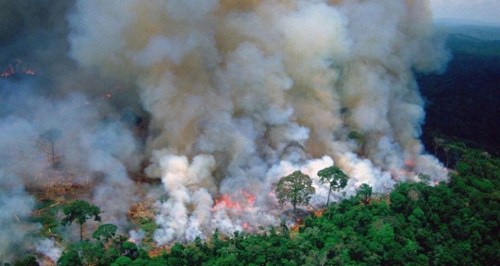
(imagen del muro de fb de Guillermo Espinosa)
«De hecho, los incendios forestales que padece Brasil en lo que va de año no tienen precedentes desde que en 2013 comenzaron a monitorearse desde el espacio.
Pero el fuego también es noticia en otros países como Bolivia, Paraguay y Perú»
https://www.bbc.com/mundo/noticias-america-latina-49426794
agosto 23, 2019
Así el futuro de microempresarios de sí mismos trabajando para el capitalismo de plataformas: «conducir un Uber parte del día, rentar la cama disponible en casa en Airbnb, rentar parte del closet como lugar de amacenamiento en Amazon o alojar, por las noches, al dron que hace las entregas (también) de Amazon»
«what neoliberalism’s further weakening of the social is likely to mean for the future organization of labor by examining data and information companies associated with the emergence of the corporate sharing economy. It focuses on the sharing economy because it is here that the implications for workers of such a shift to a postwelfare capitalist society are most apparent today. This is a society in which we are encouraged to become not just what Michel Foucault calls entrepreneurs of the self but microentrepreneurs of the self, acting as if we are our own, precarious, freelance microenterprises in a context in which we are being steadily deprived of employment rights, public services, and welfare support. Witness the description one futurologist gives of how the nature of work will change, given that 30 to 80 percent of all jobs are predicted to disappear in the next twenty years as a result of developments in automation and advanced robotics: “You might be driving Uber part of the day, renting out your spare bedroom on Airbnb a little bit, renting out space in your closet as storage for Amazon or housing the drone that does delivery for Amazon.”
Gary Hall, The Uberfication of the University.
agosto 22, 2019
«Cuán terriblemente duro e imposible resulta que la subsistencia dependa de los ingresos esporádicos» Mozart precario
Tomado del muro de fb de Eduardo Huchín:
“Probablemente sepas por propia experiencia y por la realidad vivida cuán terriblemente DURO E IMPOSIBLE resulta que la subsistencia dependa de los INGRESOS ESPORÁDICOS; sin un montante mínimo es imposible mantener en orden los asuntos privados. No se puede crear nada a partir de la nada: si, en nombre de nuestra amistad, pudieras hacerme este favor [un préstamo], yo podría, en primer lugar, pagar las facturas a su DEBIDO TIEMPO, o sea, con tranquilidad, mientras que ahora tengo que POSPONER MIS PAGOS y luego GASTAR DE GOLPE todo lo que ingreso, y eso ocurre a menudo en el momento MENOS OPORTUNO. En segundo lugar, podría trabajar con la mente despejada y el corazón más ligero y, en consecuencia, ganar más dinero.”
[Carta de Mozart a su amigo Johann Michael Edler von Puchberg, de junio de 1788.]
agosto 19, 2019
«¿Cómo verán las máquinas el mundo y a nosotros los humanos en él?»
«On the surface, Paglen’s investigation of computer vision appears less political than the issues of government surveillance. Yet as his work probes the construction of this increasingly dominant point of view, we begin to understand the urgent and grave implications for our day-to-day lives. These machine-made images will, more and more, define many basic elements of our lives—how we move (self-driving cars), what we consume (automated assembly-lines and fulfillment centers), and even how we interact with one another (facial recognition as a means of social control). And disturbingly, these images will be produced and looked at only by other machines. We have seen the unsettling images of human drone operators turning contemporary battlefields into video game-like digital visualizations—but how will machines see the world and us human beings within it?»
agosto 19, 2019
La nube

John Gerrard, «Farm», 2016. El proyecto completo puede verse aquí: http://www.johngerrard.net/farm-pryor-creek-oklahoma-2015.html
agosto 15, 2019
“El merito no puede residir únicamente en generar enunciados de verdad. Habría que poner atención al modo de decirlos, a la habilidad para decirlos de manera situada, en modos particulares, con respeto a la dignidad de quien habla, y con la libertad de explorar los límites de lo que está siendo dicho”
“Free software as a community, has been and still sometimes is critiqued as being an exclusionary space of white male sociality (Nafus 2012; Massanari 2016; Ford and Wajcman 2017; Reagle 2013). I think this critique is true, but it is less a problem of identity than it is a pathology of a certain form of liberalism: a form that demands that merit consists only in the content of the things we say (whether in a political argument, a scientific paper, or a piece of code), and not in the ways we say them, or who is encouraged to say them and who is encouraged to remain silent (Dunbar-Hester 2014).
One might, as a result, choose to throw out liberalism altogether as a broken philosophy of governance and liberation. But it might also be an opportunity to focus much more specifically on a particular problem of liberalism, one that the discourse of OA also relies on to a large extent. Perhaps it is not the case that merit derives solely from the content of utterances freely and openly circulated, but also from the ways in which they are uttered, and the dignity of the people who utter them. An OA (or a free software) that embraced that principle would demand that we pay attention to different problems: how are our platforms, infrastructures, tools organized and built to support not just the circulation of putatively true statements, but the ability to say them in situated and particular ways, with respect for the dignity of who is saying them, and with the freedom to explore the limits of that kind of liberalism, should we be so lucky to achieve it.”
Chelty, Christopher, “Recursive Publics and Open Access” en Guerrilla Radical Open Access, Coventry: Post Office Press, Rope Press and Memory of the World, 2018, págs. 16-24. Descargable aquí (última consulta: 14/08/2019).
agosto 14, 2019
«Acceso abierto no sólo a los contenidos, sino a los datos sobre nosotros mismos que se producen a diario» Balázs Bodó
“If publishers are happy to let go of access control and copyright, it means that they’ve found something that is even more profitable than selling back to us academics the content that we have produced. And this more profitable something is of course data. Did you notice where all the investment in academic publishing went in the last decade? Did you notice SSRN, Mendeley, Academia.edu, ScienceDirect, research platforms, citation software, manuscript repositories, library systems being bought up by the academic publishing industry? All these platforms and technologies operate on and support open access content, while they generate data on the creation, distribution, and use of knowledge; on individuals, researchers, students, and faculty; on institutions, departments, and programs. They produce data on the performance, on the success and the failure of the whole domain of research and education. This is the data that is being privatized, enclosed, packaged, and sold back to us. (…) Taylorism reached academia. In the name of efficiency, austerity, and transparency,our daily activities are measured, profiled, packaged, and sold to the highest bidder. (…) I strongly believe that information on the self is the foundation of self-determination. We need to have data on how we operate, on what we do in order to know who we are. This is what is being privatized away from the academic community, this is being taken away from us. Radical open access. Not of content, but of the data about ourselves. This is the next challenge.”
Balázs Bodó, “Own Nothing” en Guerrilla Open Access, Coventry: Post Office Press, Rope Press and Memory of the World, 2018, págs. 16-24. Descargable aquí: https://hcommons.org/deposits/objects/hc:19826/datastreams/CONTENT/content
agosto 9, 2019
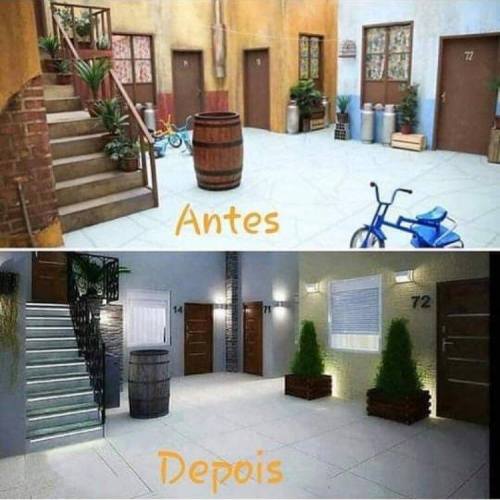
LA VECINDAD DEL CHAVO …
 bordarretazos